
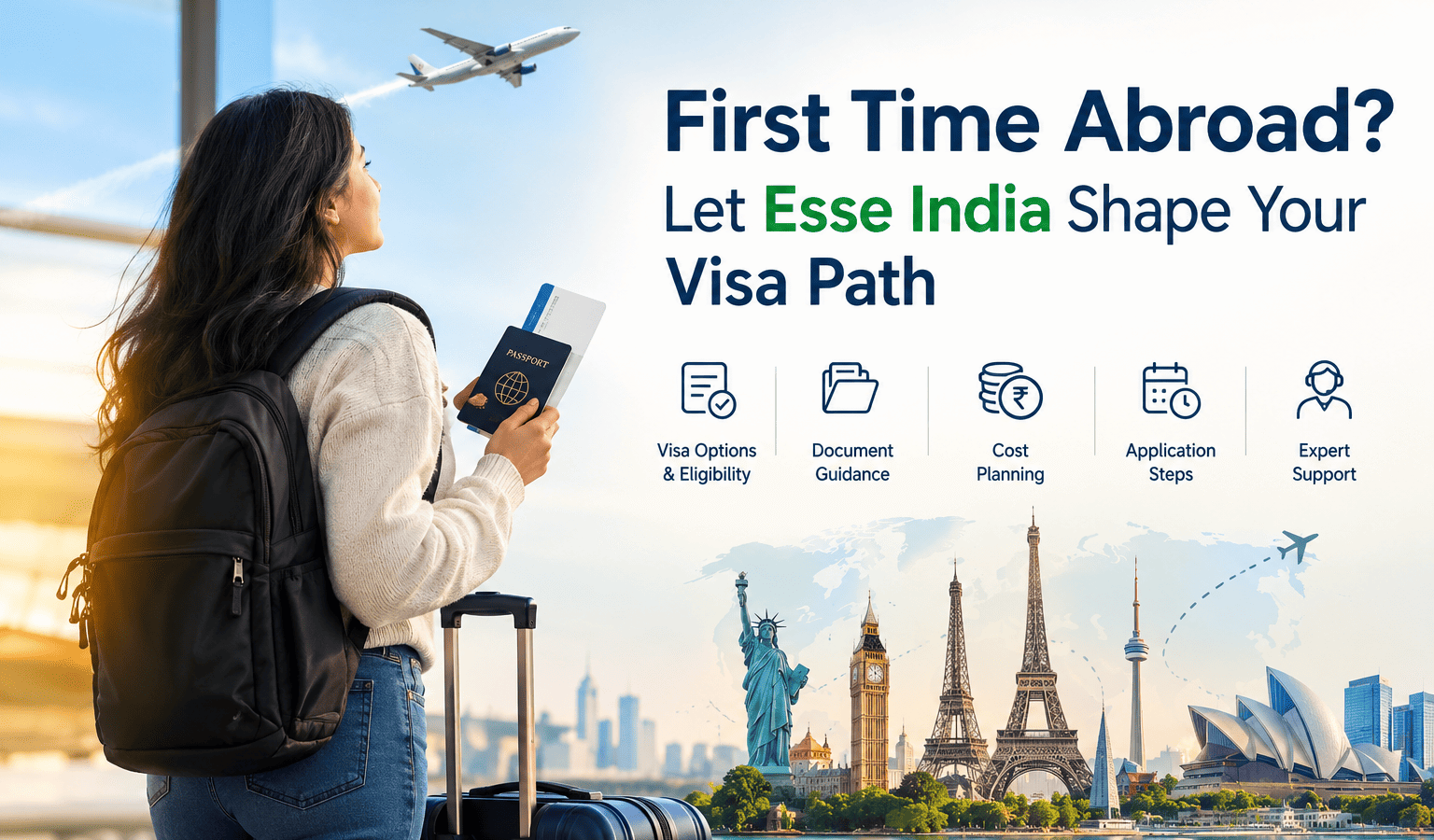
Planning to go abroad for the first time can bring excitement along with several questions. Which country should you choose? Do you need a tourist visa, work visa, study permit, or permanent residency pathway? How much money should you save, and which documents will you need before applying?
For many first-time applicants, the biggest challenge is not completing a form. It is understanding which immigration route matches their purpose, qualifications, finances, and long-term plans. Making the wrong assumption at the beginning can lead to unnecessary expenses, delays, or an application that does not match the intended purpose of travel.
Esse India focuses on helping applicants explore immigration options and understand the importance of proper preparation. Before making any commitment, it is essential to check the rules of your chosen destination, confirm your eligibility, and organize your documents. This guide explains the important decisions to make before your first international move, the common mistakes to avoid, and the questions you should answer before starting a visa application.
What Should You Know Before Going Abroad for the First Time?
Before choosing a destination, understand that travelling abroad, studying overseas, working in another country, and settling permanently are different objectives. Each may require a different visa category and supporting documents.
For example, a visitor visa generally does not permit regular employment. A study permit may require admission to an eligible institution, while a work visa can involve employer sponsorship, occupation-specific conditions, or other requirements.
Start by answering three questions:
- Why do you want to go abroad? Decide whether your primary purpose is tourism, education, employment, family reunification, or permanent settlement.
- What makes you eligible? Review your qualifications, work experience, financial circumstances, and any other criteria relevant to your intended visa.
- What is your long-term plan? Consider whether you intend to return after a temporary visit, complete your studies, develop your career, or explore an eligible permanent residency pathway.
Esse India can be part of your initial research into immigration guidance, but the final choice should be based on your individual circumstances and the official requirements of the destination country.
Which Visa Should You Choose for Your First International Move?
There is no single visa that works for every applicant. The right option depends on what you intend to do abroad and whether you meet the applicable conditions.
| Visa or immigration pathway | Generally intended for | What to check first |
| Visitor visa | Tourism, visiting family, or other permitted short-term activities | Purpose of visit, financial evidence, and return or onward travel requirements where applicable |
| Study visa or permit | Education at an eligible institution | Admission, tuition arrangements, funds, and study conditions |
| Work visa or permit | Employment under permitted conditions | Employer requirements, occupation eligibility, and work authorisation |
| Permanent residency pathway | Eligible applicants seeking long-term settlement | Program criteria, qualifications, experience, language requirements, and other applicable conditions |
| Business visa or pathway | Permitted business activities or eligible business-related immigration | Purpose of activity, supporting evidence, and category-specific rules |
The names and requirements of these categories differ across countries. Some destinations also offer special pathways for particular occupations, family situations, or qualifications.
How Can You Identify the Right Immigration Route?
Begin with official government immigration websites. Read the eligibility criteria for each relevant category and note the documents, fees, application stages, and restrictions. If you are comparing multiple countries, create a shortlist instead of applying everywhere. Compare each option against your actual profile and priorities.
Esse India encourages applicants to approach this stage with realistic expectations. Esse India also recommends comparing immigration pathways carefully, as a popular destination is not automatically the most suitable one. With guidance from Esse India, applicants can better understand that having a job offer or educational qualification does not guarantee eligibility for every immigration program.
What Documents Do First-Time Visa Applicants Usually Need?
Documentation depends on the country, visa category, and personal circumstances. However, preparing a basic record of your identity, finances, education, and travel purpose can make the process easier to organise.
| Document category | Examples | Why it may be required |
| Identity | Valid passport and photographs meeting specifications | To establish identity and travel-document details |
| Financial evidence | Bank statements, income evidence, sponsorship documents where accepted | To demonstrate financial circumstances or meet funding requirements |
| Education | Certificates, transcripts, admission letters | To support study applications or relevant qualifications |
| Employment | Employment letters, experience certificates, job offer documents | To establish work history or satisfy category-specific requirements |
| Travel purpose | Itinerary, invitation letter, travel arrangements where requested | To explain the intended visit or activity |
| Civil records | Birth, marriage, or family documents where applicable | To establish relationships or other personal details |
This is a general reference list, not a universal checklist. Some documents may not be needed for your application, while other documents may be mandatory.
How Can You Avoid Document-Related Mistakes?
First-time applicants should check every requirement before uploading or submitting their records.
- Confirm that your passport details match the information entered on the application.
- Check whether your photographs and scanned documents meet the prescribed format and quality.
- Ensure names, dates, education details, and employment history are consistent.
- Arrange translations or certified copies when the authority requires them.
- Keep copies of the completed application, payment confirmation, and official correspondence.
- Never submit altered certificates, false financial evidence, or misleading information.
Esse India-related immigration research should always be supported by accurate documentation and current official instructions. If a requirement is unclear, seek clarification before submitting your application.
How Much Money Should You Prepare Before Moving Abroad?
One of the most common questions among first-time applicants is how much money they need. The answer depends on the country, purpose of travel, visa category, number of applicants, and expected length of stay. Do not calculate your budget using only the visa application fee. Consider the expenses you may need to pay before departure and after arrival.
| Expense | What to consider |
| Government fees | Visa or permit application charges and other applicable fees |
| Documentation | Translation, certification, or educational assessment costs |
| Tests | Language examinations or other required assessments |
| Education or employment preparation | Tuition deposits or other legitimate costs relevant to your pathway |
| Travel | Flights, local transportation, and suitable travel insurance |
| Initial settlement | Accommodation, food, transport, and essential living expenses |
| Emergency reserve | Funds for unexpected costs or delays |
How Can You Make a Realistic Budget?
Start by checking official fee schedules and any proof-of-funds requirements for your intended visa category. Then estimate accommodation, food, transportation, and other regular expenses using reliable information for your destination. Esse India encourages applicants to research these costs carefully before making financial commitments.
Keep government fees separate from professional service fees. If you engage an immigration consultant, ask for a written breakdown explaining what is included, what may cost extra, and what the refund conditions are. Esse India recommends understanding these details clearly before signing an agreement.
Esse India can be included in your research into immigration guidance, but you should make financial decisions only after understanding the actual costs and requirements relevant to your case.
When Should You Start Your Visa Application?
There is no single application timeline for every country or visa type. Some applications require several stages before submission, while others involve additional checks or requests after the application has been lodged. For this reason, work backwards from your intended departure or course commencement date.
A Practical Preparation Timeline
Stage 1: Research your options. Identify your purpose, compare relevant visa categories, and review eligibility requirements.
Stage 2: Collect documents. Arrange your passport, financial evidence, education records, employment documents, and any other required paperwork.
Stage 3: Complete additional requirements. Book necessary tests, arrange translations, obtain admission or employment documents, and complete other applicable steps.
Stage 4: Review and submit. Check the official checklist, complete the forms accurately, pay the applicable fees, and retain your submission records.
Stage 5: Monitor your application. Follow official status updates and respond to requests within the specified deadlines.
Do not assume that a published processing estimate is a guaranteed completion date. Avoid making non-refundable travel commitments until you understand your visa status and the conditions that apply.
What Are the Most Common Mistakes First-Time Applicants Make?
Many immigration problems begin with incorrect assumptions rather than a lack of effort. Understanding these risks early can help you make better decisions.
1. Choosing a Visa Without Checking Eligibility
A visa category may sound suitable but include conditions you do not meet. Read the complete criteria before spending money on an application.
2. Relying on Social Media Advice Alone
Another applicant’s experience may be useful for identifying questions, but it does not establish that the same rules apply to you. Verify important details through official government sources.
3. Underestimating the Total Cost
Applicants may account for the application fee but overlook accommodation, document preparation, travel, or initial living expenses. Prepare a complete budget before committing.
4. Submitting Inconsistent Information
Differences between application forms and supporting documents may lead to further questions or other consequences. Review your details carefully and correct genuine errors before submission.
5. Trusting Guaranteed Visa Promises
Be cautious of anyone promising guaranteed approval, special access to an immigration authority, or a guaranteed job offer in exchange for payment. Visa decisions are made by the relevant authorities.
How Can You Check Whether an Immigration Consultant Is Trustworthy?
First-time applicants may find it difficult to understand which services they need and who is qualified to provide them. Before paying a consultant or adviser, conduct independent checks.
Verify relevant authorisation. Some countries regulate who can provide paid immigration advice. For example, applicants seeking Canadian immigration advice should check the applicable Canadian rules and verify the representative’s status through the appropriate official register or regulator.
Request a written service agreement. It should explain the services, professional charges, additional costs, and refund conditions.
Protect your personal information. Share documents through appropriate channels and never disclose passwords or one-time verification codes.
Be cautious of unrealistic promises. No private consultant can replace the immigration authority’s decision-making process. When considering Esse India or any other provider, ask specific questions about the proposed assistance and verify any credentials or service claims that matter to your decision. Independent checks are an important part of choosing professional support.
How Can Esse India Help You Plan Your Visa Path?
Planning your first international move becomes more manageable when you break the process into clear questions and practical next steps. When researching Esse India, consider what type of guidance you need. You may want to understand the difference between visa categories, identify documents to prepare, clarify eligibility questions, or organize the stages involved in your intended pathway. Before engaging any immigration service provider, explain your objective and ask what the consultation or service covers. Understand the costs, responsibilities, and limitations before making a commitment. Keep your own copies of documents and application records, verify important information independently, and remember that the final visa decision rests with the relevant immigration authority.
Your First International Move: A Final Checklist
Before moving forward, use this checklist to identify what you have completed and what still needs attention.
- I have clearly defined my reason for going abroad.
- I have identified a visa category that matches my intended purpose.
- I have checked the official eligibility criteria.
- I have reviewed the document checklist for my visa category.
- I understand the government fees and estimated living expenses.
- I have organised my documents and checked their accuracy.
- I have reviewed the visa conditions and likely application stages.
- I have verified the credentials of any adviser I plan to engage.
- I have avoided making non-refundable plans based on an unconfirmed outcome.
- I know where to check official updates and application status.
Completing this checklist does not guarantee approval, but it can help you identify gaps before submitting an application.
Conclusion
Going abroad for the first time involves important decisions about your destination, visa category, eligibility, documents, budget, and timeline. The process becomes easier to manage when you research each requirement carefully instead of rushing directly into an application. Start by defining your purpose, compare suitable pathways, and use official government resources to verify the rules. Prepare your documents honestly, calculate your costs realistically, and check the credentials of any professional whose services you consider.
Esse India can be part of your research as you explore immigration guidance and plan your next steps. Most importantly, make decisions based on your circumstances, accurate information, and the requirements of your intended destination. Your first move abroad does not need to be based on guesswork. With thoughtful preparation and a clear understanding of the process, you can approach your visa journey with greater confidence and realistic expectations.
Frequently Asked Questions
Start by defining your purpose, such as work, study, tourism, or permanent residency. Research the relevant visa categories, review official eligibility requirements, estimate your budget, and prepare a document checklist before committing to an application.
The suitable visa depends on your purpose and eligibility. A visitor visa may suit permitted short-term travel, while study, work, and permanent residency pathways have different conditions. Check the official requirements for your intended destination.
Most international visa applications require a valid passport or an accepted travel document. Check the destination’s rules for passport validity and other requirements. Indian citizens can use the official Passport Seva portal for passport application information.
Your budget should include application fees, document preparation, travel, accommodation, and initial living expenses. The required funds vary by destination and visa category, so verify the official financial requirements before deciding how much to save.
A visitor visa generally does not authorise regular employment. The exact conditions depend on the destination and visa category. Check official rules before accepting work or performing activities that may require separate authorisation.
Processing times depend on the country, visa category, application volume, and individual circumstances. Check the relevant immigration authority’s current estimates and allow time for document preparation, appointments, and possible requests for additional information.
No private consultant can guarantee a visa decision made by an immigration authority. Be cautious of guaranteed-approval claims and verify the relevant credentials of anyone providing regulated immigration advice.
Follow the official eligibility criteria, provide truthful information, submit complete and consistent documents, and meet the requirements for your visa category. No method can guarantee approval, but careful preparation can help reduce avoidable errors.
Verify the person’s authorisation where required, check relevant official registers, request a written agreement, and understand all fees. Avoid providers who pressure you to pay immediately or promise guaranteed visa approval.
You can research Esse India when exploring immigration guidance and organising your questions about visa options, documentation, and application preparation. Confirm the scope of any service, understand the fees, and independently verify official immigration requirements before proceeding.